Florence Travel Guide: Art, Food & the Tuscan Renaissance
Everything you need to plan a trip to Florence - the Uffizi, Duomo, Ponte Vecchio, where to eat, where to stay, and day trips into Tuscany.
Guides for Florence
Florence (Firenze) is a compact city that contains a disproportionate share of the world’s Renaissance art. A 30-minute walk from one side to the other takes you past the Uffizi, the Duomo, the Accademia, Ponte Vecchio, and Piazza della Signoria - a concentration of world-class art and architecture that no other city can match. The practical challenge is managing the crowds. Florence receives over 10 million tourists a year in a city of fewer than 400,000 residents, and in summer the historic centre is genuinely overcrowded.
The art
The Uffizi Gallery is non-negotiable. Botticelli’s Birth of Venus and Primavera, Leonardo’s Annunciation, Michelangelo’s Doni Tondo - the collection is extraordinary. Book well in advance; walk-in entry in summer is rarely possible before afternoon. A guided Florence tour that covers the Uffizi, Duomo, and Accademia is the most efficient way to book all three with skip-the-line access. Allow three to four hours minimum. Florence is the central stage for the period that produced all of this: our guide to the Italian Renaissance covers the key artists, patrons, and ideas that transformed European art and thought between the 14th and 16th centuries - context that makes the Uffizi significantly more rewarding.
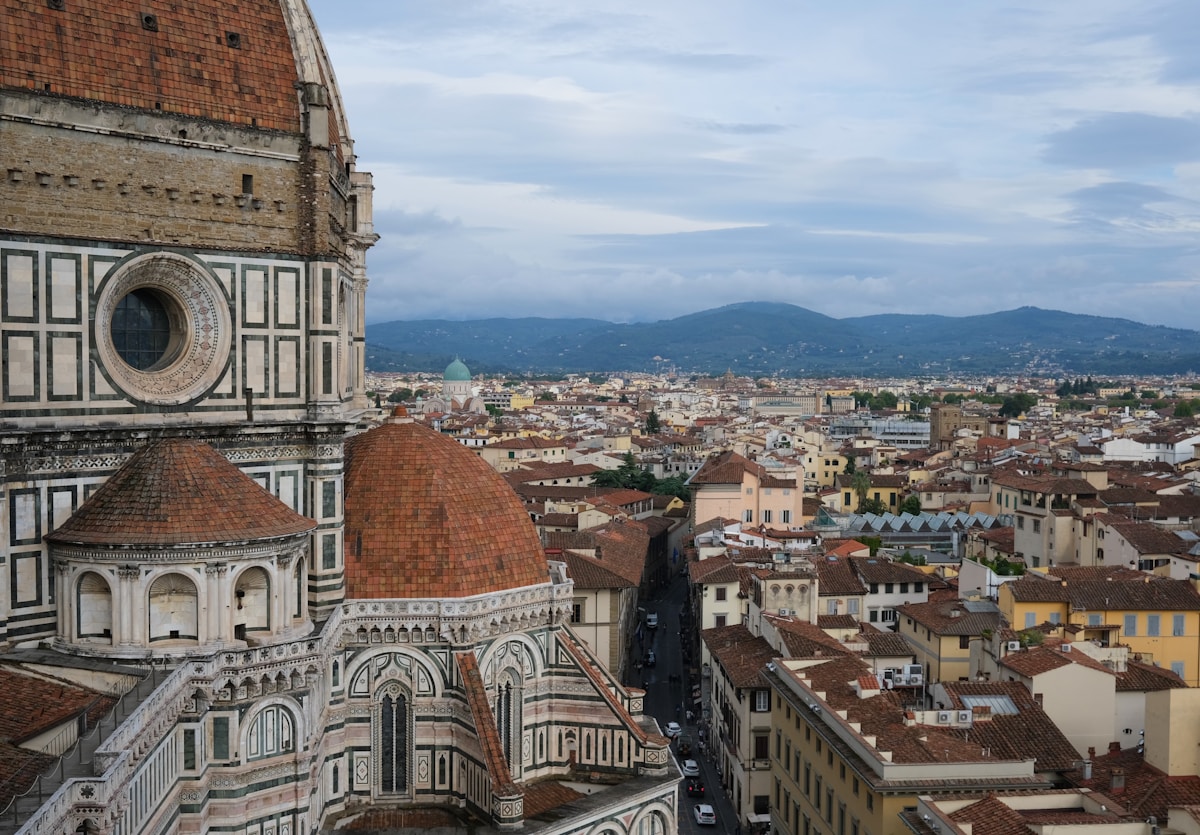
The Accademia Gallery exists primarily to house Michelangelo’s David. The statue is larger than most visitors expect and profoundly impressive in person. Again: book ahead. The Duomo complex (Santa Maria del Fiore, Giotto’s Campanile, Baptistery, crypt, dome climb) requires a single combined ticket booked online. The dome climb - Brunelleschi’s engineering solution to a dome 44 metres wide - is the best view in Florence. Our Uffizi tickets guide covers booking windows, skip-the-line options, and how to time entry to avoid the worst crowds. Our Florence Duomo tickets guide covers what to book in which order - the climb is timed and can fill weeks ahead in peak season.
Food
Florence’s food tradition is Tuscan. Bistecca alla Fiorentina (thick-cut Chianina T-bone, rare, sold by weight) is the defining dish and requires a serious restaurant to be done properly. Lampredotto (tripe sandwich) from the central market food stalls is the street food. Ribollita (bread and bean soup) and pappa al pomodoro (bread and tomato soup) are the cucina povera classics. The Mercato Centrale upstairs hall is the best one-stop lunch in the city. For plant-based travellers, our vegan guide to Florence maps the best vegan restaurants in the city and identifies the naturally plant-based Tuscan dishes worth ordering. Florence has a long claim on artisan gelato - our Italian gelato guide covers how to identify the real thing versus tourist-grade product, and the best flavours to order by season. The region produces Chianti, Brunello di Montalcino, and Vernaccia di San Gimignano - our Italian wine guide covers the major DOC and DOCG zones and what to order with what.
Neighbourhoods
The Oltrarno - south of the Arno - is the most liveable part of Florence for longer stays. It has a neighbourhood feel, better restaurant prices, and contains the Pitti Palace and the Boboli Gardens. San Frediano within the Oltrarno is the local’s area for aperitivo and dinner. The Santa Croce neighbourhood (east of the centre) has the basilica and better-value accommodation.
Beyond the Uffizi: more museums worth visiting
The Bargello is Florence’s sculpture museum - the building is a 13th-century fortress and the collection includes Donatello’s David (the first nude male sculpture since antiquity), Michelangelo’s Bacchus, and works by Cellini and Verrocchio. Far less visited than the Uffizi. The Museo dell’Opera del Duomo holds the original sculptures removed from the cathedral exterior - including Michelangelo’s unfinished Pietà - and is the best place to understand how the cathedral complex was built.
The Pitti Palace, across the Arno in the Oltrarno, houses five separate museums and the Boboli Gardens. The Palatine Gallery contains Raphael and Titian; the Silver Museum holds the Medici treasure collections. A single day ticket covers the gardens and several museums.
Practical information
Florence is highly walkable - the distance from the train station (Santa Maria Novella) to the Uffizi is under 1km. Taxis are metered; avoid unofficial drivers at the station. Florence Airport (Amerigo Vespucci/Peretola) is approximately 5km northwest of the centre - a taxi costs approximately €25–30, or the T2 tram runs to Santa Maria Novella station in approximately 25 minutes for approximately €1.70. For a pre-booked private transfer with fixed pricing and driver meet-and-greet, Welcome Pickups covers Vespucci Airport arrivals. The main tourist areas have significant pickpocket activity in peak season; keep bags secured in crowds around Piazza del Duomo and the Uffizi entrance.
Florence does not have a metro system. Buses (ATAF) cover outer neighbourhoods. Cycling is possible but requires care - the historic centre streets are shared with pedestrians and vehicles.
Uffizi and Accademia slots gone for your dates? There are usually last-minute tours available - we track Florence tours with confirmed open spots in the next three days, updated twice daily.
Where to stay
The historic centre puts you closest to everything but commands premium prices and noise. The Oltrarno (south bank) offers the best value per night with short walking distances to the main sights. The Santa Croce area (east) is quieter and slightly cheaper. Budget accommodation clusters near the station.
Day trips
Siena is the strongest day trip option - 90 minutes by bus from Florence bus station (SITA), with Piazza del Campo and the Duomo as the highlights. Lucca is 1.5 hours by train and entirely different in character - flat, walkable, medieval walls fully cyclable. Pisa (1 hour) is worth half a day. San Gimignano (medieval towers) and Volterra are reachable by bus in 1.5-2 hours. The Chianti wine country between Florence and Siena requires a car or a tour to visit properly.
For a further reach: the Cinque Terre is 2.5 hours by train, viable as a long day out. Elba, Napoleon’s island of exile, is 2.5 hours from Florence by train and ferry - a manageable summer extension for those based in Tuscany.
Planning time in both cities? Our Rome vs Florence guide breaks down what each does best. For north-vs-south Tuscany questions, our Venice vs Florence guide covers the differences in character and logistics. If you are considering Bologna as an alternative base, our Bologna vs Florence guide sets out the trade-offs. For a detailed look at Florence accommodation by neighbourhood - Oltrarno vs Santa Croce vs the centre - our Florence hotels guide covers all price tiers.
Upcoming Events in Florence
Ferragosto 2026
Ferragosto 2026, 15 August. Italy's biggest summer holiday — businesses close, beaches fill, and the country celebrates at its most festive.
Alba White Truffle Fair 2026
Alba White Truffle Fair 2026, October 3–December 6. World's largest white truffle market with Barolo tastings, tajarin, and live auctions in Piedmont.
Book an experience
Top experiences in Florence
Explore the best tours and activities in Florence, with instant confirmation and free cancellation on most bookings.