Things to Do in Venice: Canals, Art & Islands Beyond St. Mark's
Book an experience
Top-rated experiences in Venice Travel Guide
The highest-rated tours and activities in Venice Travel Guide. Book today, cancel free if plans change.
Venice is one of those cities where the main tourist sights and the genuine experience diverge sharply. The area around St. Mark’s Square is among the most crowded places in Europe in peak season. Ten minutes’ walk in any direction takes you into a Venice that is emptier, more local, and in many respects more interesting.
The essential sights
St. Mark’s Basilica (Basilica di San Marco)
Byzantine-Venetian architecture at its most exuberant, covered in approximately 8,000 square metres of gold mosaic. The basilica took over 500 years to build and decorate. Entry to the basilica is free, but timed-entry registration is required (reserve at veniceinsider.com - without it, the queue can exceed 1.5 hours in peak season). The Pala d’Oro (golden altarpiece encrusted with gems, approximately €5 as of 2026) and the treasury (approximately €5) are worth the additional entry. The Loggia dei Cavalli (approximately €7) gives access to the upper gallery and the original bronze horses (Roman, 4th century or earlier). Open Monday–Saturday 9:30am–5:15pm, Sunday 2pm–5:15pm (hours vary seasonally).
Doge’s Palace (Palazzo Ducale)
The administrative heart of the Venetian Republic for 700 years. The ceremonial halls are extraordinary for their scale and paintings - Tintoretto’s Paradise in the Sala del Maggior Consiglio is the largest oil painting in the world (approximately 22 metres wide). The Bridge of Sighs connects the palace to the prison cells. Entry approximately €30 (combined with Museo Correr, Museo Archeologico, and Biblioteca Marciana) as of 2026. Open daily 9am–6pm (summer) or 9am–5pm (winter). Book online to avoid the ticket queue. The Secret Itineraries tour (approximately €32, must be booked separately) goes behind the scenes - through the torture chamber, Casanova’s cell, and the lead-roofed attic prison. One of the best guided tours in Italy. Guided tours of Venice covering the Doge’s Palace, St Mark’s Basilica, and the hidden sestieri are available and help navigate booking requirements for major sights.
Gallerie dell’Accademia
The definitive collection of Venetian painting, from Byzantine icons through Bellini, Giorgione, Titian, Tintoretto, and Veronese. Gentile Bellini’s Procession in St. Mark’s Square shows the piazza in the 15th century. Veronese’s Feast in the House of Levi fills an entire wall. Entry approximately €15 as of 2026. Open Tuesday–Sunday 8:15am–7:15pm, Monday 8:15am–2pm.
Peggy Guggenheim Collection
Modern and contemporary art in Peggy Guggenheim’s former palazzo (Palazzo Venier dei Leoni) on the Grand Canal. Picasso, Kandinsky, Miro, Pollock, Magritte, Dalì, and Ernst. The sculpture garden includes works by Giacometti and Henry Moore. Entry approximately €16 as of 2026. Open Wednesday–Monday 10am–6pm, closed Tuesday.
Scuola Grande di San Rocco
Tintoretto’s masterpiece - an entire building decorated with over 60 paintings completed between 1564 and 1588. The ceiling cycle in the upper hall (depicting Old Testament scenes) and the wall paintings (New Testament) are among the most ambitious artistic projects of the Renaissance. Entry approximately €10 as of 2026. Open daily 9:30am–5:30pm. Mirrors are provided so you can study the ceiling paintings without craning your neck.
Escaping the crowds
Dorsoduro - The southern district is where Venetians actually live. Campo Santa Margherita is the social centre - university students, local bars, a daily vegetable market. Walk along the Zattere (southern waterfront) for views to Giudecca island and excellent gelato at Gelateria Nico (gianduiotto approximately €4).
Cannaregio - The northern sestiere. The Jewish Ghetto (the world’s first, established 1516 - the word “ghetto” comes from the Venetian word for foundry, which occupied the site before) has a small but moving museum (approximately €12 as of 2026) and guided tours of the synagogues (approximately €14). The Ca’ d’Oro palace on the Grand Canal (entry approximately €6) has a fine Gothic facade and a small art collection.
Evening walks - The main tourist crowds leave Venice on the evening ferries and trains. After 7pm from June through August, the streets around Rialto and Dorsoduro are dramatically quieter. The city at night, with reflections on the canals and the sounds of water against stone, is a fundamentally different experience.
The islands
Murano - 15 minutes north by vaporetto (Lines 4.1/4.2 from Fondamente Nove). The island has produced Venetian glass for over 700 years - the glassmakers were relocated here from the main island in 1291 to reduce fire risk. The Museo del Vetro (Glass Museum, entry approximately €12 as of 2026) covers 700 years of glassmaking technique. Factory tours are free but involve intense sales pressure. The Basilica of Santa Maria e Donato (12th century, free entry) has a spectacular mosaic floor and a dragon’s bones (actually whale vertebrae) behind the altar.
Burano - 40 minutes north (Line 12 from Fondamente Nove). Brightly painted fishermen’s houses in pink, yellow, orange, and blue - originally painted in distinct colours so fishermen could identify their houses from the lagoon. Famous for lace-making; the Museo del Merletto (Lace Museum, approximately €5 as of 2026) documents the tradition. Good for lunch - try Trattoria al Gatto Nero (fish pasta approximately €16–20, book ahead). Less interesting for more than 3–4 hours.
Torcello - The oldest settled island in the lagoon (5th century), once home to 20,000 people. Now almost uninhabited. The Cathedral of Santa Maria Assunta contains 12th-century Byzantine mosaics - including a monumental Last Judgment on the west wall - that are among the finest in Italy. Entry approximately €5 (cathedral) plus approximately €5 (museum) as of 2026. Take Line 12 to Burano, then the shuttle boat to Torcello.
Gondola rides
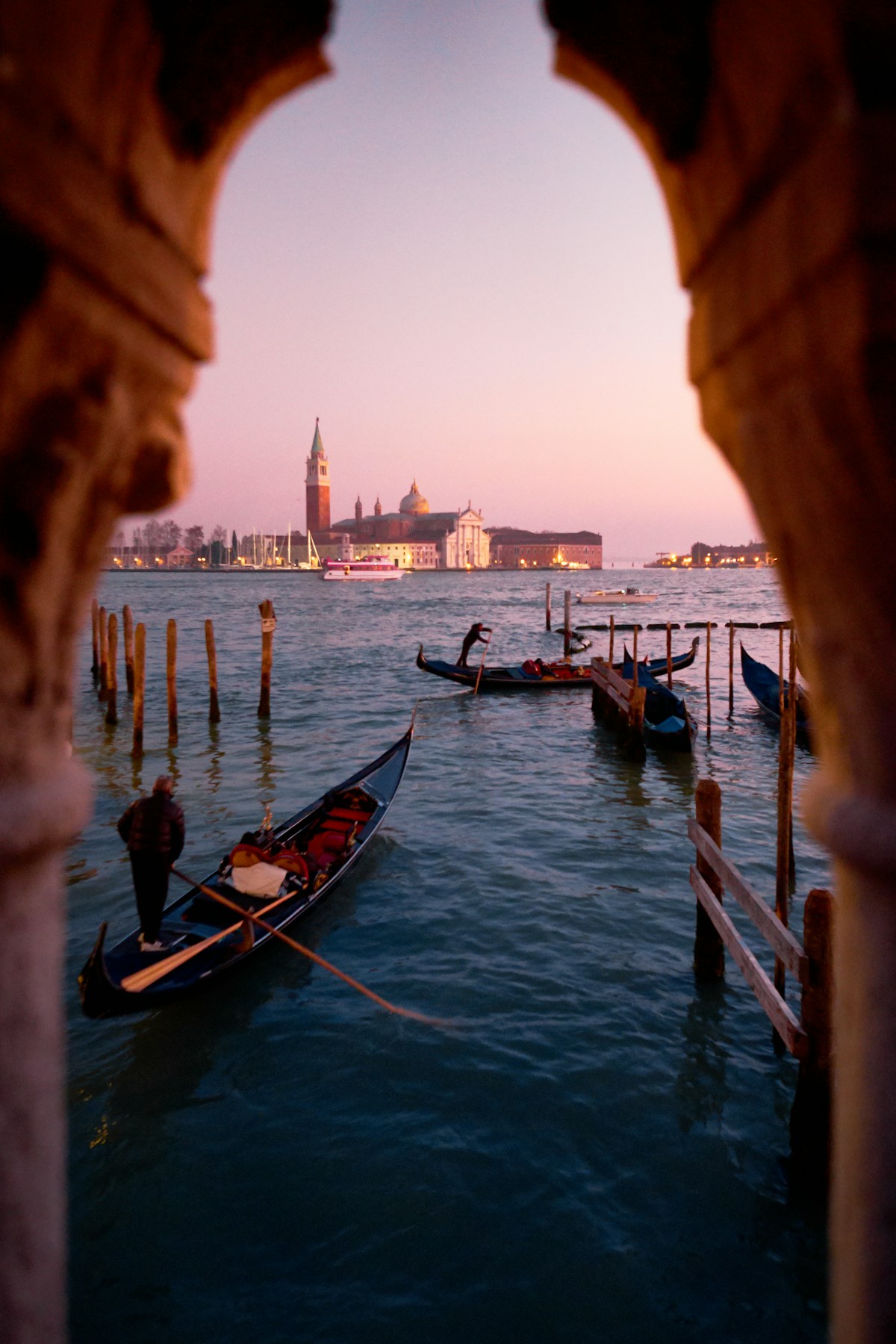
The official rate for a 30-minute gondola ride is approximately €80 during the day and approximately €100 after 7pm, as of 2026 (for up to 6 passengers - the rate is per boat, not per person). The route through smaller canals is more interesting than the Grand Canal. Gondola stations (stazioni) are located throughout the city - the traghetto (gondola ferry, approximately €2) across the Grand Canal is a budget alternative that gives a brief gondola experience.
Practical notes
- Vaporetto (water bus) single tickets cost approximately €9.50 - expensive for individual journeys. A 24-hour pass (approximately €25), 48-hour pass (approximately €35), or 72-hour pass (approximately €40) is much better value. Buy at ACTV ticket machines at major stops.
- The Venice Card (Venezia Unica) bundles vaporetto passes with museum entry - calculate whether it saves money based on your planned visits.
- Venice has no cars, buses, or bicycles. Walking and boats are the only transport. The city is approximately 4km from end to end. Comfortable shoes are essential - the bridges have steps, not ramps.
- Acqua alta (high water) floods parts of the city approximately 4–6 times per year, mainly November–February. The MOSE barrier system now prevents the worst events, but minor flooding still occurs. Buy waterproof boots (approximately €10–15) from any hardware shop if flooding is forecast.
Back to the full Venice travel guide for accommodation, getting around, and when to visit. For the cicchetti bars, seafood trattorias, and Venetian wine, see the Venice food guide. For where to stay on the island and on the mainland, see best hotels in Venice. For gondola rides - official pricing, routes, and whether it’s worth it - our Venice gondola rides guide covers the full picture. For day trips to Verona, Padua, and the Dolomites, see day trips from Venice.
Frequently Asked Questions
- What is the best time to visit Venice?
- November to March is quietest (Acqua Alta floods are possible but manageable with waterproof boots). April, May, September, and October offer good weather with fewer crowds than peak summer. Avoid July and August and Carnival weekend.
- What is the Doge's Palace?
- The Palazzo Ducale was the centre of Venetian political power for centuries. The interior contains vast state rooms decorated by Tintoretto and Veronese, the Bridge of Sighs, and the prison. It's the second most important sight in Venice after the Basilica. Book online.
- Is a gondola ride worth it in Venice?
- For the experience rather than the transport, yes - once. Official rates are fixed (higher after 7pm). A 30-minute ride covers the smaller canals rather than the Grand Canal. Vaporetto Line 1 along the Grand Canal is more practical for seeing the palaces.
Ready to explore?
Browse hundreds of tours and activities. Book securely with free cancellation on most options.
Browse on GetYourGuide →Best price guaranteed: same price as booking direct. We earn a small commission at no extra cost to you.